01 / ELECTRIC
Use electric power.
Make electricity part of your steam supply.
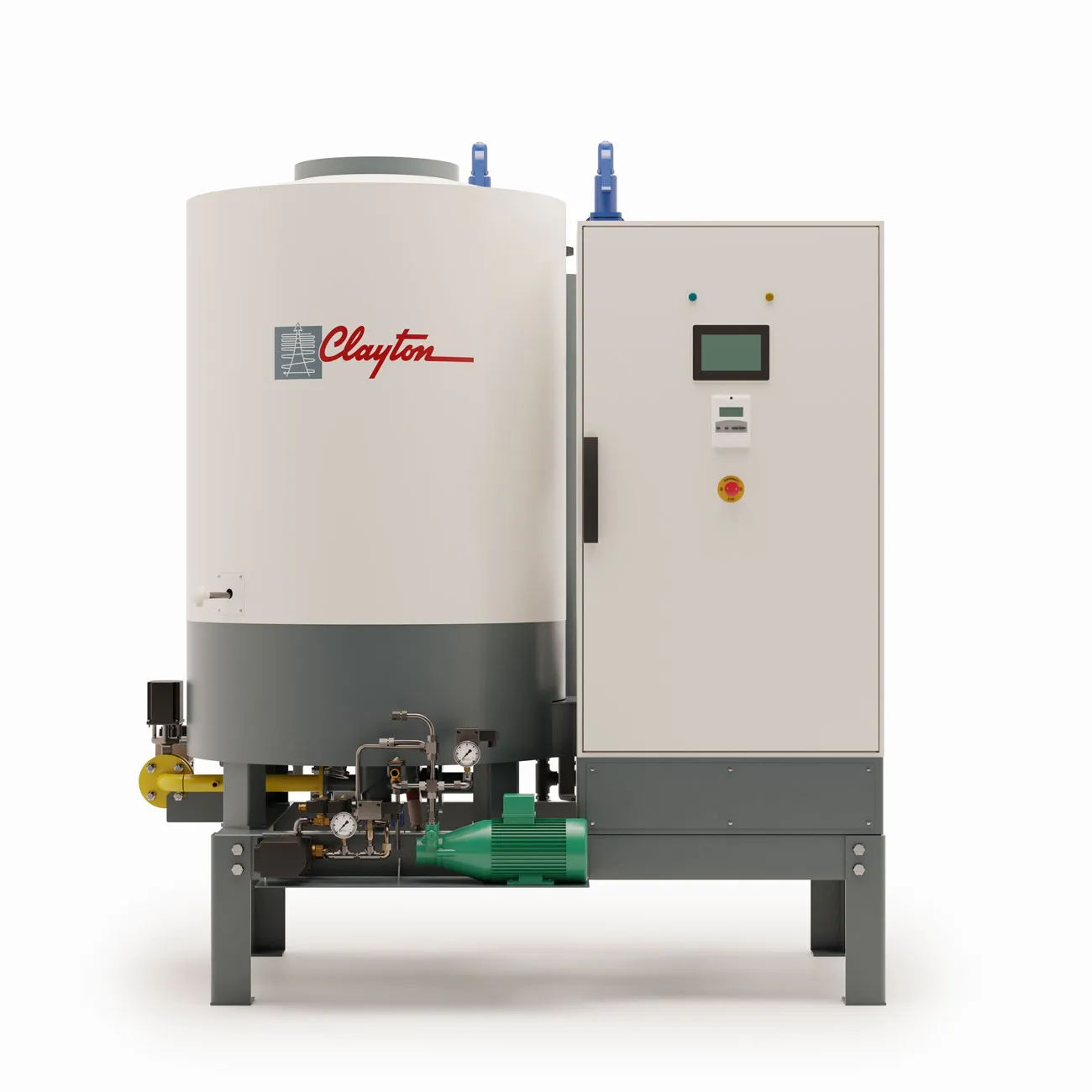
Combine electric and fuel-fired steam generation with direct waste heat recovery and, where suitable, steam heat pump technology. Build a coordinated installation around your steam demand, energy availability, recoverable heat and electrification goals.
 Talk to a steam specialist
Make electricity part of your steam supply.
Keep fuel-fired generation in your energy mix.
Explore EGBs and WHRUs where suitable exhaust heat is available.
A hybrid steam installation combines complementary ways of producing steam, offering flexibility to use the technologies that best suit the process. Alongside electric and fuel-fired generators (fossil or bio-fuel), waste heat can be recovered directly through EGBs or WHRUs where sufficiently high-temperature exhaust heat is available. Lower-temperature process heat may also be upgraded using steam heat pump technology.
Choose the combination that fits your site rather than assuming every installation needs every technology. Steam demand, required pressure, available electrical capacity, fuel options, waste heat sources and control integration determine which configuration is suitable for you.
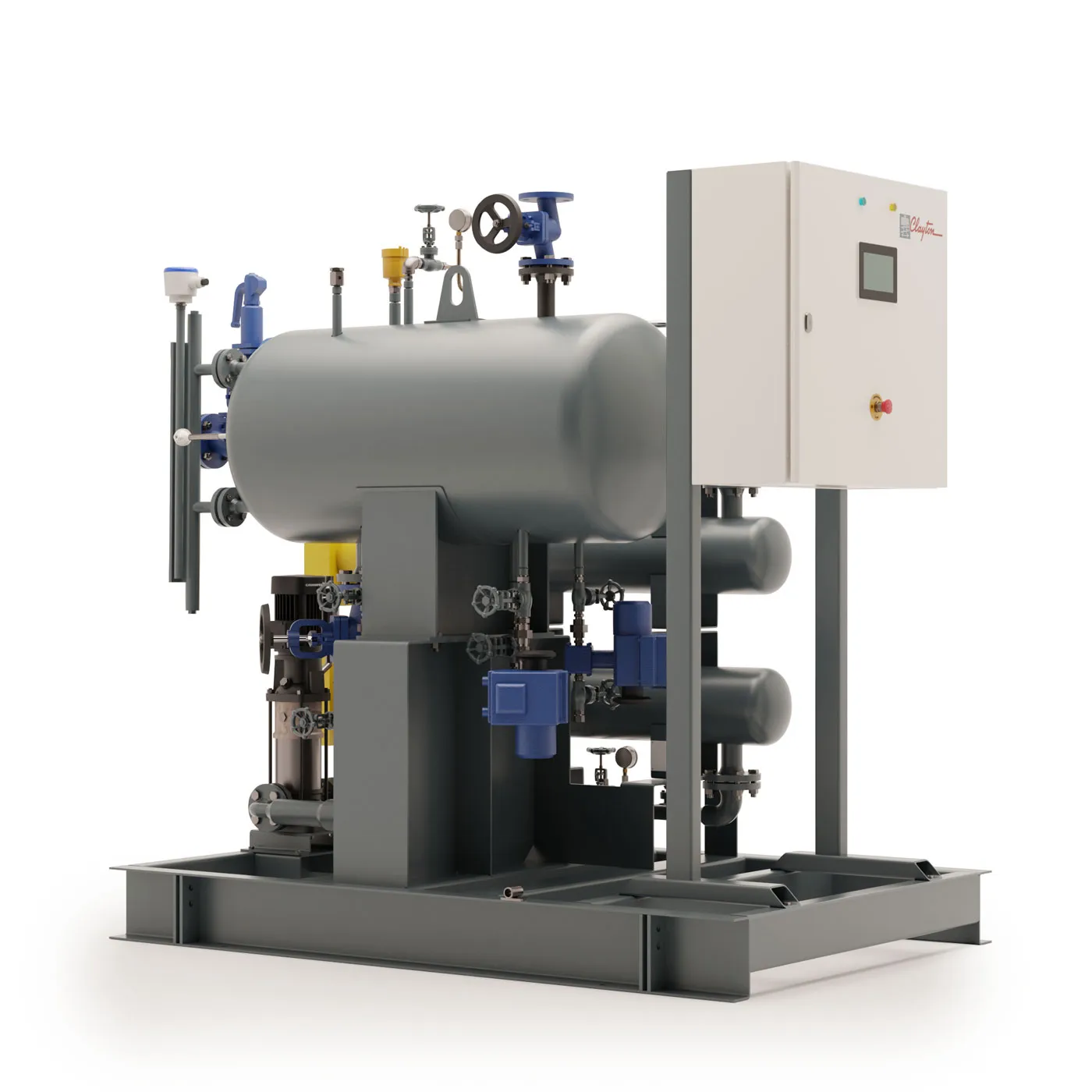
Clayton Exhaust Gas Boilers (EGBs) recover heat from hot exhaust gases to produce steam or hot water. Suitable applications include engines, gas turbines, furnaces and thermal oxidisers.
EGBs form part of the wider waste heat recovery category. Clayton also uses the term Waste Heat Recovery Units (WHRUs), including for its turbine applications.
In a suitably engineered hybrid installation, recovered heat can supply part of the steam demand alongside electric and fuel-fired generation, reducing the additional energy required.
Recoverable output depends on exhaust temperature, flow, operating hours and steam requirements. Heat recovery supplements the selected generators and produces steam only while sufficient exhaust heat is available.
Not every waste heat source is hot enough to generate steam directly through an EGB or WHRU. Industrial steam heat pumps offer another route: they recover lower-temperature process heat and use electrically driven heat-pump technology to raise its temperature to a level suitable for steam production.
Clayton is developing a steam heat pump solution in collaboration with Solid Energy, combining very-high-temperature heat pump technology with Clayton's steam generation module. A working prototype is currently being tested and developed to produce steam at pressures up to 4 bar.
The prototype has achieved a COP of 3.5 under tested operating conditions, meaning that approximately 3.5 units of useful thermal energy are delivered for each unit of electrical energy supplied to the heat pump.
The prototype uses a natural refrigerant. This enables the high operating temperatures required for steam production while avoiding reliance on conventional synthetic refrigerants and supports a low-GWP approach to industrial heat-pump technology.
Potential heat sources can include warm process water, condensate, wash water and other low-grade thermal streams that might otherwise be cooled or discharged. By recovering and upgrading this heat, the heat pump can reduce the additional primary energy required to produce steam. In a hybrid steam system, it can complement electric steam generators, fuel-fired generators and EGB/WHRU systems.
Prototype achieved COP: 3.5 | Natural refrigerant
The most suitable combination depends on the temperature and availability of the waste heat, required steam conditions, electrical capacity and operating profile.
Explore EGBs and waste heat recovery
WHY GO HYBRID?
Choose an operating strategy that considers electricity and fuel costs alongside steam demand and usable waste heat. Where suitable, heat pumps can also upgrade lower-temperature process heat. Potential savings depend on tariffs, heat availability, equipment performance and operating profile
Size electric steam capacity around the power available at your site. Fuel-fired generation can supply the remaining demand, allowing you to take a phased approach to electrification.
Make on-site renewable electricity part of your steam production strategy. Clayton Smart Control supports automatic energy-source selection based on your own renewable energy generation.
Replacing fuel-fired steam with sufficiently low-carbon electricity, recovering heat that would otherwise be lost, and upgrading suitable low-temperature heat can reduce emissions. The benefit depends on the electricity source, displaced fuel use and the overall operating profile.
Clayton electric steam generators offer fully modulating output and integrated Smart Control for hybrid operation. This allows electric steam production to respond to changing demand and available on-site renewable power.
With suitable energy-management integration, the control strategy can also use electricity and fuel price signals. Where heat recovery is included, coordination of the EGB/WHRU with the other generators must also be engineered. Where a steam heat pump is included, its operation must be coordinated with available heat-source conditions, steam demand and electrical capacity. The required connections, priorities and control functions are defined for each project.
For a site with suitable recoverable heat, one possible strategy is to use direct EGB/WHRU steam where high-temperature exhaust heat is available, or a steam heat pump where lower-temperature process heat can be upgraded. Electric or fuel-fired generation can meet the remaining demand. As heat availability, tariffs or demand change, the agreed controls adjust the balance within the installed capacities.
Clayton's approach combines complementary technologies around the site's steam and energy requirements. Electric steam generators provide controllable electric steam production. Fuel-fired generators provide responsive steam generation and fuel flexibility. EGBs and WHRUs recover suitable high-temperature waste heat directly, while the steam heat pump under development creates opportunities to upgrade lower-temperature process heat into useful steam.
From a new steam installation to an extension of an existing system, Clayton can support initial studies, engineering, installation, commissioning and after-sales care. Skid-mounted and containerised arrangements can also be explored to suit the project.
 FAQ
FAQ
Electric generation, waste heat recovery and, where technically suitable, steam heat pump technology may be considered following an assessment of existing steam equipment, electrical power, recoverable heat sources, required steam conditions and control integration.

















Clayton is a global manufacturer of industrial steam solutions. European production and engineering have been carried out since 1961 in Bornem, Belgium, where Clayton of Belgium serves as the EMEA headquarters and main production hub for Europe, the Middle East, and Africa. The global headquarters of the Clayton Group is located in California, with additional production facilities in Mexico and Europe, and subsidiaries in France, Germany, the Netherlands, Spain, and the United Kingdom.

WORK SAFETY