Published: Mar 23, 2026
When evaluating steam generation equipment, initial investment often dominates early discussions. However, for most industrial users, operational cost over the lifetime of the unit far outweighs initial capital expenditure. Fuel consumption, standby losses, water treatment, and heat losses all directly affect the cost of producing steam.
This article compares a conventional fire-tube boiler with a Clayton steam generator, focusing specifically on the operational cost drivers that influence long-term economics.
 Calculate your possible profit
Modern combustion systems (whether installed on a conventional fire-tube boiler or a Clayton steam generator) are highly optimized. With proper burner control and good maintenance practices, both technologies can achieve comparable combustion efficiencies.
This means that when comparing operational costs, the primary differences do not arise from how efficiently fuel is burned, but rather from how efficiently the generated heat is retained and utilized.
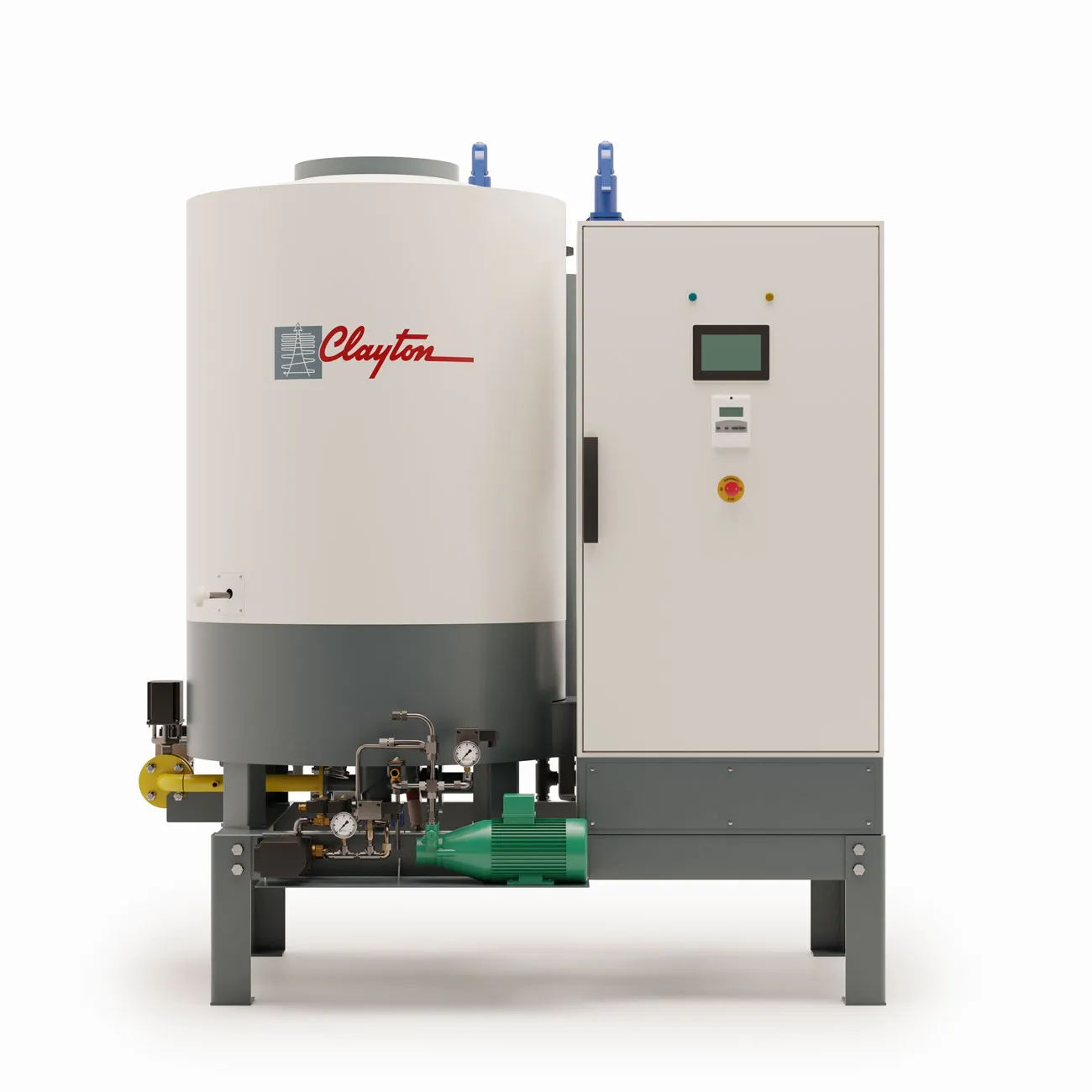
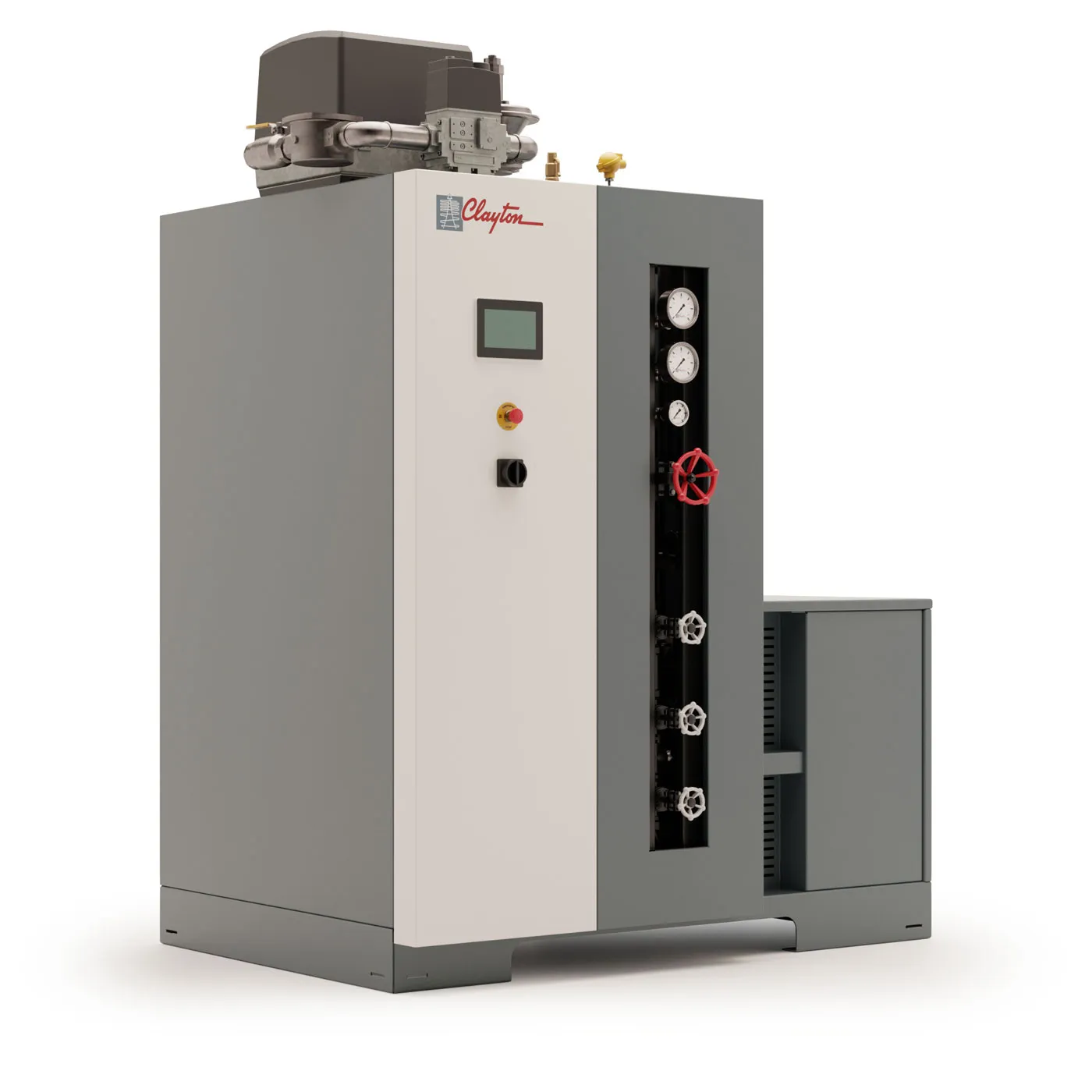
One of the most significant distinctions between the two technologies lies in their physical size.
A conventional fire-tube boiler is a large pressure vessel containing a substantial water volume. By design, it has a considerably larger external surface area compared to a Clayton steam generator of equivalent steam capacity.
Both units must be insulated to ensure personnel safety (safe-to-touch surface temperatures).
When both the fire-tube boiler and the Clayton Steam generator are insulated to have the same surface temperature:
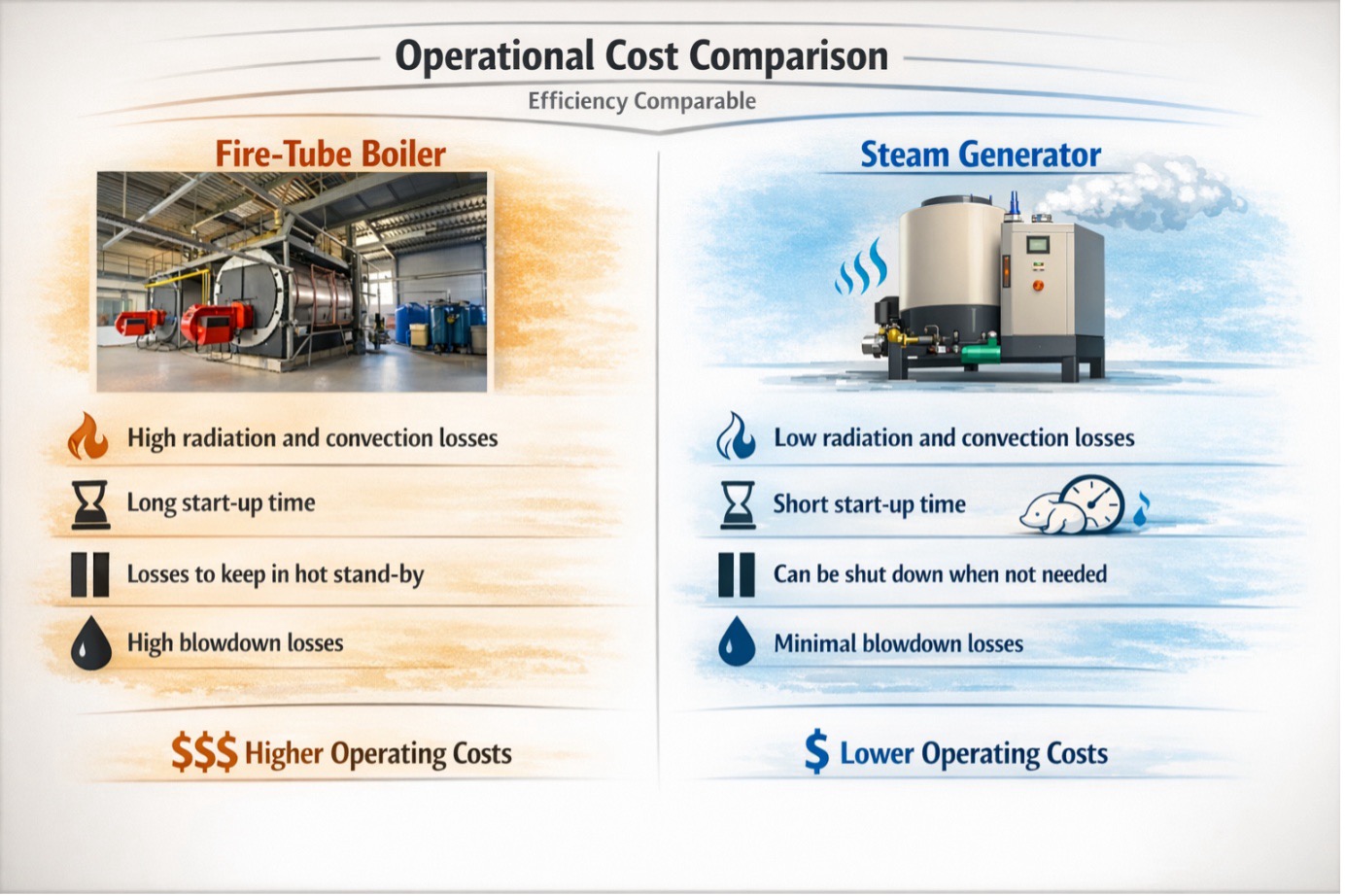
Even with high-quality insulation, heat loss is proportional to exposed surface area. Over thousands of operating hours annually, these continuous losses translate into measurable fuel costs.
Result: The more compact design of the Clayton steam generator reduces standing thermal losses and improves overall operational efficiency.
Startup energy consumption is another major differentiator.
A fire-tube boiler contains a large volume of water that must be heated from ambient temperature to saturation temperature before steam can be produced. This large thermal mass requires a significant amount of energy to get up to temperature which translates directly to a large fuel consumption and an extended start up time.
In contrast, a Clayton steam generator contains a very low water content. The benefit is a lower thermal inertia, meaning significantly less energy required to reach operating temperature and a reduced startup time (minutes instead of hours).
In operations with intermittent steam demand, these startup losses can accumulate quickly. The higher water content of the fire-tube boiler becomes an economic disadvantage in such applications.
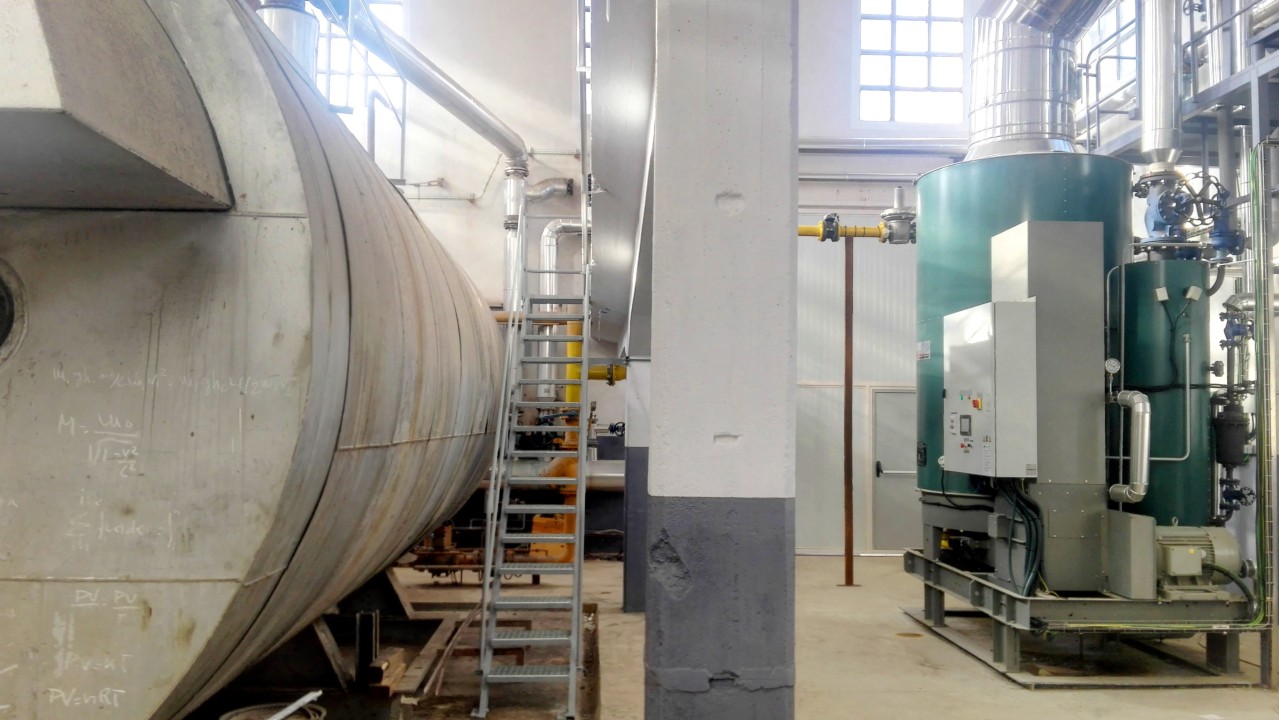
Because a fire-tube boiler requires substantial time (hours instead of minutes) and energy to reach operating temperature, many facilities choose to keep it in hot or warm standby mode during periods of low demand.
This practice avoids lengthy startup delays but introduces continuous heat losses:
These losses must be compensated by additional fuel input, increasing operating costs.
A Clayton steam generator, due to its fast startup capability and low water content, can be:
This eliminates unnecessary standby fuel consumption and significantly reduces operational expenses in facilities with variable or intermittent steam demand.
All steam systems must manage dissolved solids (salts) in the boiler water to prevent scaling, carryover and foaming. This is achieved through periodic blowdown.
A conventional fire-tube boiler purges straight from the vessel. A Clayton steam generator purges from the excess water, meaning that the blowdown water contains a larger concentration of dissolved solids. As a result:
Blowdown water leaves the system at saturation temperature and pressure, meaning it contains significant thermal energy. Each blowdown event results in:
Over time, reduced blowdown translates directly into fuel and water treatment savings.



















Clayton is a global manufacturer of industrial steam solutions. European production and engineering have been carried out since 1961 in Bornem, Belgium, where Clayton of Belgium serves as the EMEA headquarters and main production hub for Europe, the Middle East, and Africa. The global headquarters of the Clayton Group is located in California, with additional production facilities in Mexico and Europe, and subsidiaries in France, Germany, the Netherlands, Spain, and the United Kingdom.

WORK SAFETY