
Published: Apr 27, 2026
Steam is one of the most versatile utilities in industry. It is used to generate power, heat processes, cook food, and sterilize critical equipment. At first glance, steam may seem like a uniform medium—just water in vapor form. The quality of steam varies significantly depending on how it is produced and what it is used for.
Three commonly referenced types are black steam, culinary steam, and clean steam. Each serves a distinct purpose, and choosing the right type is essential for both performance and safety.
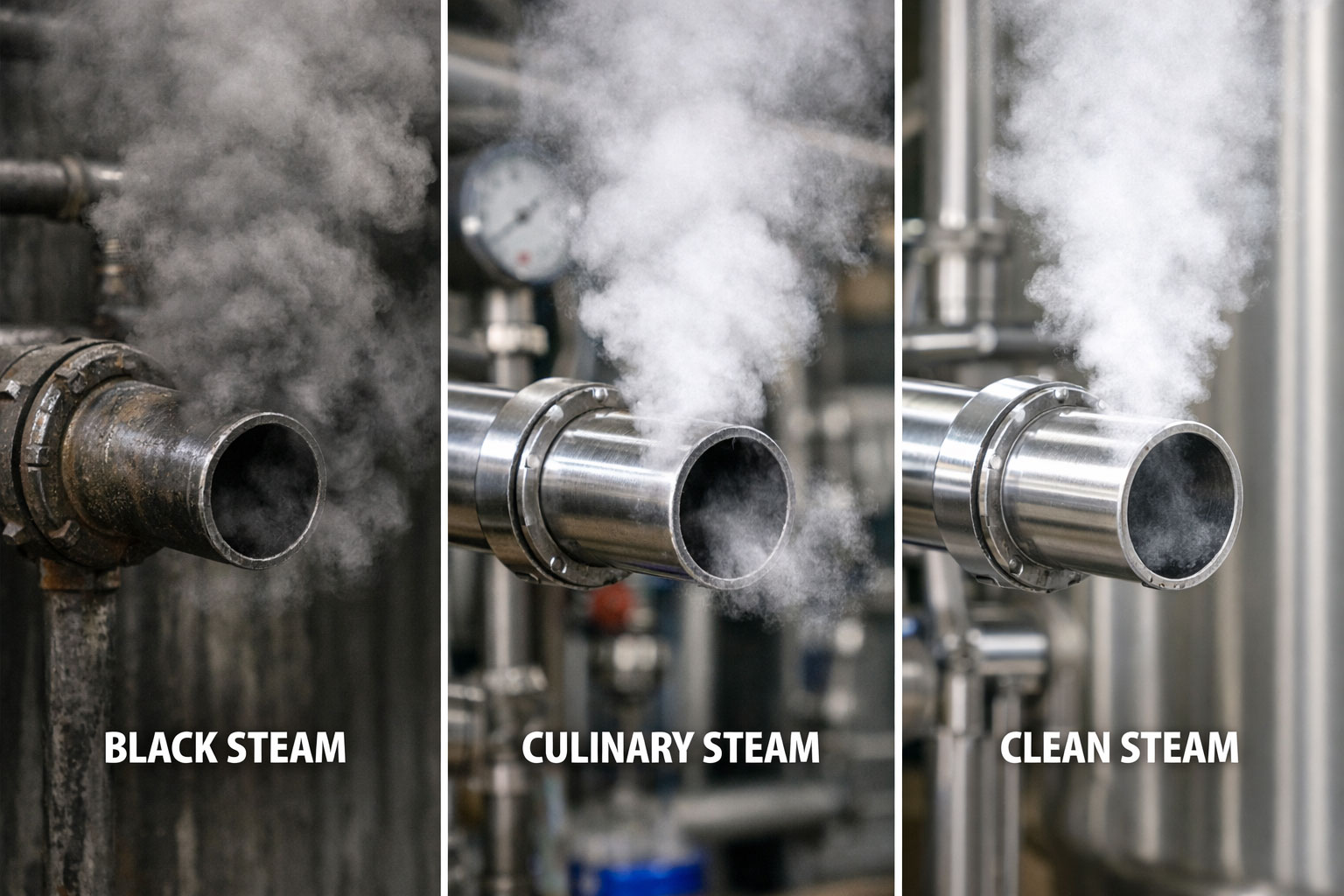
Black steam is the standard form of steam produced in most industrial boilers. It is generated using treated boiler feedwater that contains chemical additives to prevent corrosion, scaling, and oxygen damage inside the system. These treatments are essential to maintain boiler integrity and efficiency, especially at higher pressures.
However, these same chemicals mean that black steam is not pure. It can carry traces of treatment of chemicals, dissolved solids, and other contaminants from the boiler system. For that reason, it is not suitable for applications where steam comes into direct contact with products, particularly in sensitive industries.
Black steam is mainly used where heat transfer is needed without direct contact. Typical applications include heat exchangers, reboilers, and many other industrial heating processes.
In short, black steam is efficient, reliable, and economical, but not clean.
Black steam can also be used to produce mechanical work, for example in steam turbines. In these cases, the boiler water is first demineralized and deaerated, after which chemicals are added to prevent corrosion. The steam is then often superheated to ensure it is completely dry, allowing the turbine to operate efficiently.
Culinary steam is specifically designed for use in the food and beverage industry, where steam may come into direct contact with food or food-contact surfaces. This introduces a completely different set of requirements.
Unlike black steam, culinary steam is produced using potable water and carefully controlled chemical treatments. Any additives used must be food-grade and compliant with regulatory standards such as FDA guidelines. In addition, the steam is typically filtered to remove particulates and ensure a higher level of purity.
This allows culinary steam to be used safely in applications such as cooking, direct steaming, and sterilization of food processing equipment. It also plays a role in humidification within food production environments, where air quality directly affects product integrity.
The key challenge with culinary steam is balancing safety with practicality. It must maintain the efficiency of a boiler system while ensuring that no harmful substances enter the food chain. Achieving this requires careful system design, proper chemical selection, and consistent monitoring. Clayton can provide a certificate of culinary steam with its generators due to the 99,9% dry steam they supply in combination with its food approved chemicals.
Clean steam represents the highest level of steam quality. It is produced from purified water, often demineralized water or even Water for Injection (WFI) in pharmaceutical settings and does not contain any added chemicals.
To achieve this level of purity, clean steam is generated in dedicated clean steam generators rather than conventional boilers. These systems are designed to prevent contamination at every stage, ensuring that the steam meets strict regulatory standards.
Clean steam is essential in industries where even the smallest impurity can have serious consequences. In pharmaceutical and biotechnology applications, it is used for sterilization processes such as Sterilization in Place (SIP), as well as for cleanroom humidification and direct product contact in certain processes.
Because of its purity, clean steam must be validated, monitored, and maintained under tightly controlled conditions. This makes it more complex and costly to produce than other types of steam, but in critical applications, there is no alternative.
The differences between black, culinary, and clean steam are not just technical; they are fundamentally about risk and responsibility.
Using black steam in a food or pharmaceutical application could introduce harmful contaminants. Using culinary steam where clean steam is required could lead to regulatory non-compliance. On the other hand, using clean steam where it is not necessary can significantly increase costs without adding value.
The choice of steam type must therefore align with the application, the level of acceptable risk, and the regulatory environment.
Final Thoughts
Steam is often taken for granted as a utility, but its quality defines its role. From powering turbines in a combined cycle plant to sterilizing life-saving medicines, steam operates across a wide spectrum of purity and purpose.
Understanding the differences between black steam, culinary steam, and clean steam is not just a matter of terminology; it is a key part of designing safe, efficient, and compliant systems.

















Clayton is a global manufacturer of industrial steam solutions. European production and engineering have been carried out since 1961 in Bornem, Belgium, where Clayton of Belgium serves as the EMEA headquarters and main production hub for Europe, the Middle East, and Africa. The global headquarters of the Clayton Group is located in California, with additional production facilities in Mexico and Europe, and subsidiaries in France, Germany, the Netherlands, Spain, and the United Kingdom.

WORK SAFETY



